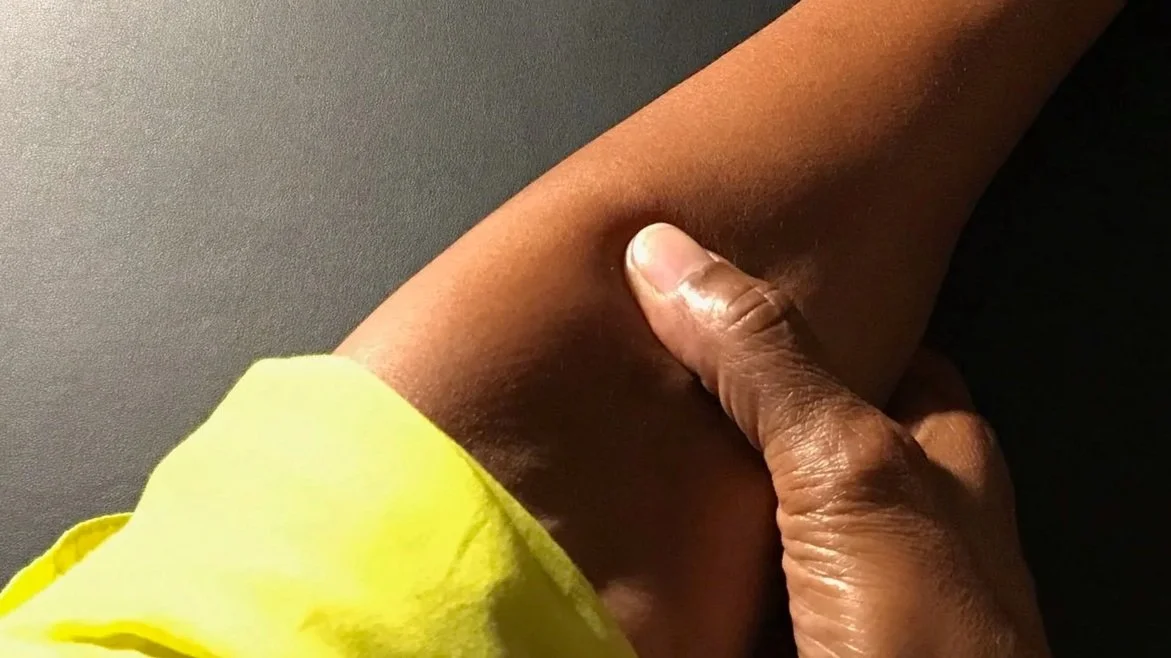
A 30 min. acupressure session uses acupressure point work for those not open to dry needling to integrate with my manual therapy sessions to help calm the nervous system, ease fascia tension, and support functional mobility in conditions like neuropathy and stroke. Evidence from stroke and neuropathy research shows that stimulating specific points—similar to those used in acupuncture—alongside rehabilitation can improve muscle tone, pain, and movement more than exercise or conventional therapy alone, likely by improving local circulation, modulating fascia and muscle stiffness, and enhancing communication within the brain’s motor and sensory networks. For clients who are not comfortable with needles, acupressure offers a non‑invasive way to access these same point pathways using gentle, sustained pressure instead of needles, while still pairing this work with hands‑on fascial techniques and targeted exercises to support better walking, balance, and overall mobility.
Liu Y, Zhou J, Zheng J and Chen J (2025) Efficacy of different acupuncture therapies on hand dysfunction in post-stroke patients: a systematic review and meta-analysis. Front. Neurol. 16:1589874. doi: 10.3389/fneur.2025.1589874
Cho, E., & Kim, W. (2021). Effect of Acupuncture on Diabetic Neuropathy: A Narrative Review. International journal of molecular sciences, 22(16), 8575. https://doi.org/10.3390/ijms22168575
A 30 min. acupressure session uses acupressure point work for those not open to dry needling to integrate with my manual therapy sessions to help calm the nervous system, ease fascia tension, and support functional mobility in conditions like neuropathy and stroke. Evidence from stroke and neuropathy research shows that stimulating specific points—similar to those used in acupuncture—alongside rehabilitation can improve muscle tone, pain, and movement more than exercise or conventional therapy alone, likely by improving local circulation, modulating fascia and muscle stiffness, and enhancing communication within the brain’s motor and sensory networks. For clients who are not comfortable with needles, acupressure offers a non‑invasive way to access these same point pathways using gentle, sustained pressure instead of needles, while still pairing this work with hands‑on fascial techniques and targeted exercises to support better walking, balance, and overall mobility.
Liu Y, Zhou J, Zheng J and Chen J (2025) Efficacy of different acupuncture therapies on hand dysfunction in post-stroke patients: a systematic review and meta-analysis. Front. Neurol. 16:1589874. doi: 10.3389/fneur.2025.1589874
Cho, E., & Kim, W. (2021). Effect of Acupuncture on Diabetic Neuropathy: A Narrative Review. International journal of molecular sciences, 22(16), 8575. https://doi.org/10.3390/ijms22168575